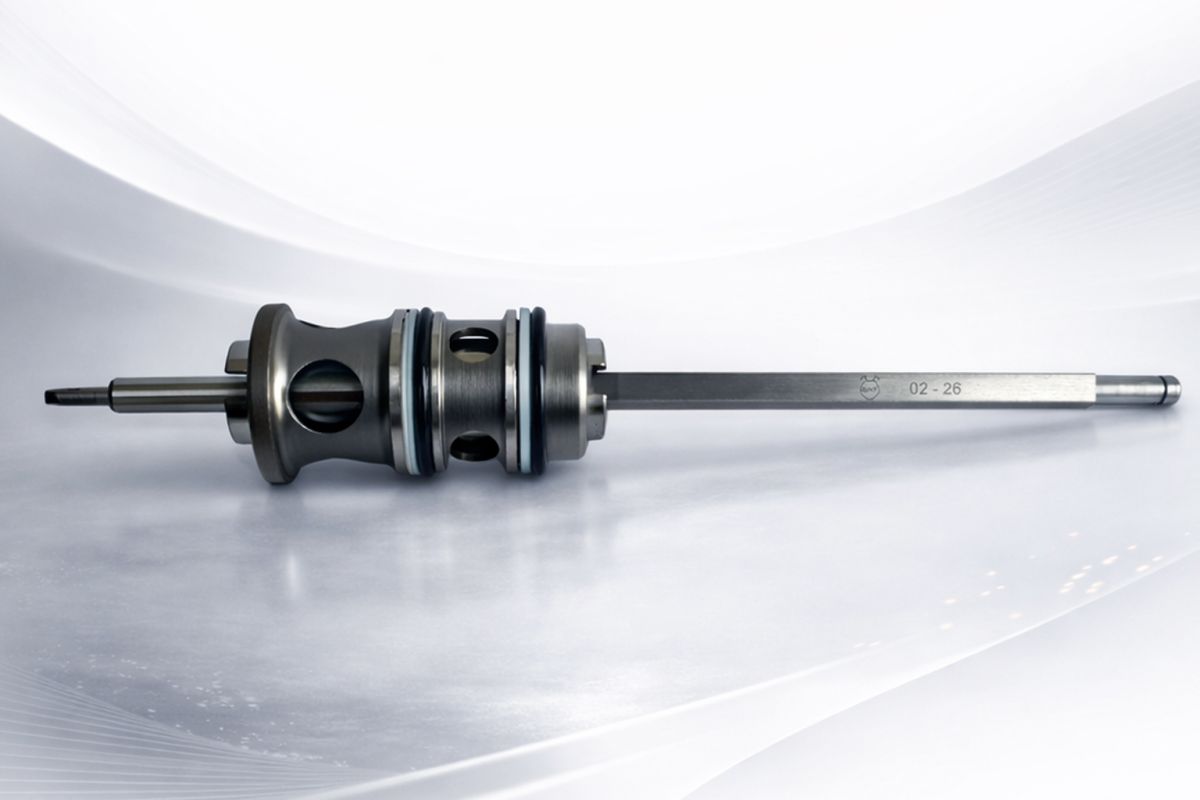
Fluid control is of great importance in many systems, from industrial machines to agricultural equipment. One of the key components that ensure these systems operate safely, efficiently, and accurately is the control valve. Control valves, especially used in hydraulic and pneumatic systems, regulate the direction, pressure, and flow rate of the fluid, ensuring the system operates in a balanced manner.
A control valve is a mechanical component used to control the flow of liquid or gas within a system. Through this valve, the direction in which the fluid will move, the pressure at which it will pass, or the amount that will flow can be controlled.
Control valves, commonly used in hydraulic systems, ensure that machines operate more precisely and safely. Although it may seem like a small part, it plays a critical role in terms of system performance.
The primary purpose of control valves is to regulate the movement of fluid within the system. This makes the operation process of machines more controlled.
The main functions of a control valve are:
Controlling the direction of the fluid
Regulating pressure
Controlling the flow rate
Ensuring the safe operation of the system
Maintaining flow balance in hydraulic circuits
These functions help prevent sudden pressure changes or irregular flow problems that may occur in machines.
Control valves are widely used in many different industries. They are an essential part of all systems where fluid control is necessary.
The main areas of use are:
Tractors and agricultural machinery
Construction machinery
Industrial production systems
Hydraulic machines
Automation and machine systems
This wide range of applications demonstrates how important control valves are for modern machinery.
The correct selection of a control valve directly affects system performance. Therefore, attention must be paid to certain technical specifications.
The following criteria should be considered when making a selection:
Compatibility with system pressure
Flow capacity
Material durability
Connection dimensions
Long-lasting use
A quality control valve reduces system failures and lowers maintenance costs.
The control valve is an important mechanical component that controls the direction, pressure, and flow rate of fluid in hydraulic and pneumatic systems. By ensuring systems operate safely, balanced, and efficiently, it enhances machine performance. Used in many areas from agricultural machinery to industrial production lines, control valves are indispensable parts of modern machine technology.